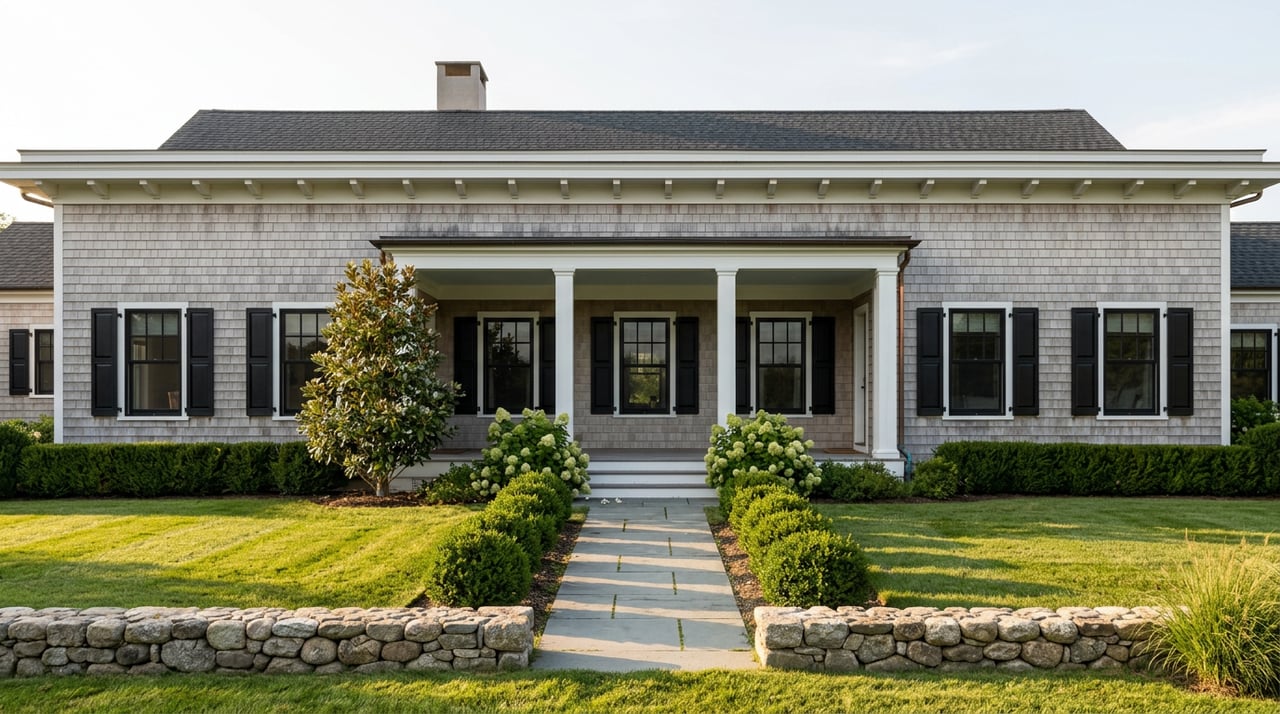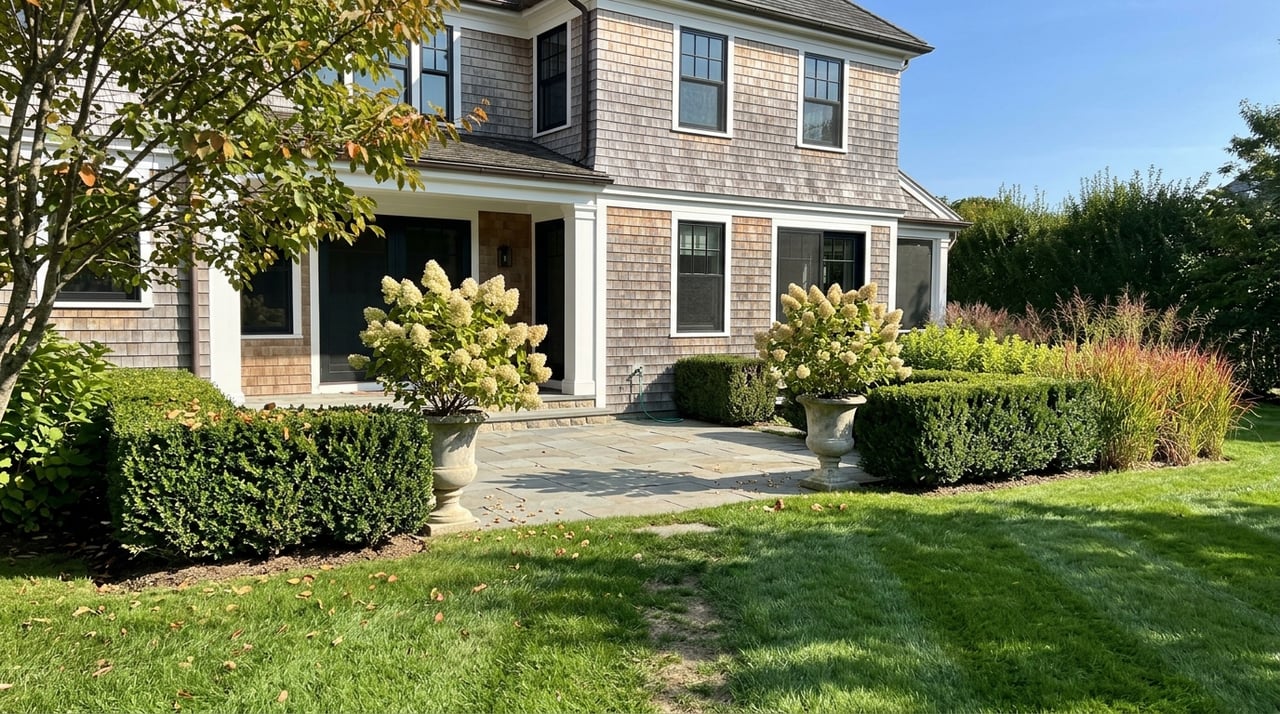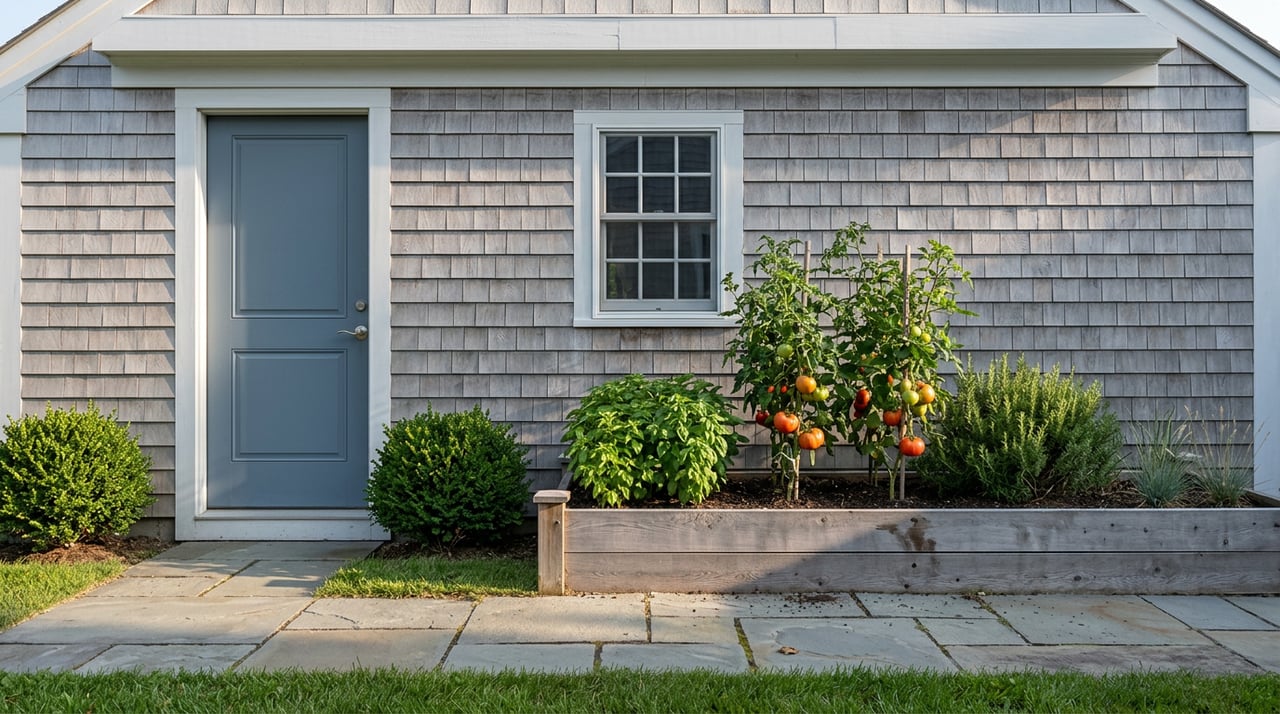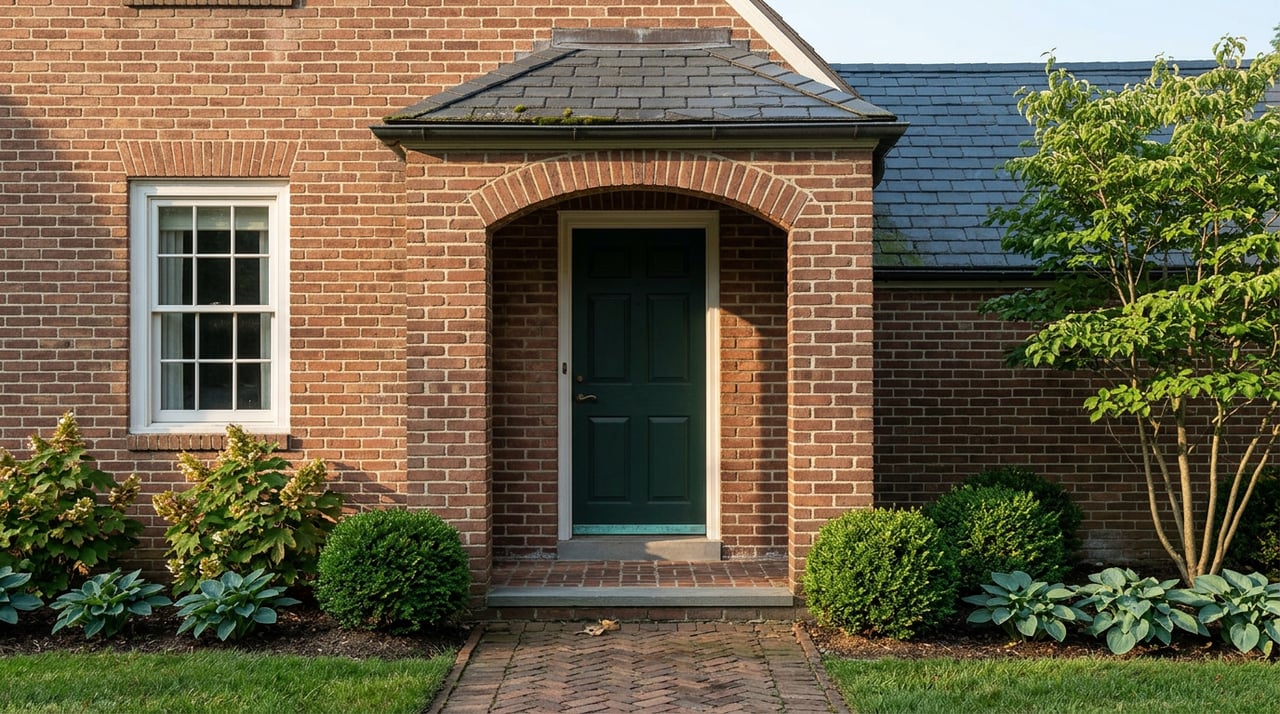
On January 27, 2026, the Village of Garden City's Architectural Design Review Board sat through a case that had nothing to do with a new building. A homeowner on Tremont Street needed a new front door. The old one had rotted through, in the owner's own words, "eaten by maggots." He replaced it with something plain, a modern style with metal grille work, because that was what needed to happen before winter.
The board would not approve it. The chairman described the house as a "storybook Tudor-influenced English Revival," part of the architectural vocabulary A.T. Stewart established when he laid out the village, and said the new door simply did not match. The homeowner's portico and stucco work at the same property were approved that same night. The door was sent back for a redesign.
That is the part of Garden City real estate that never shows up in a listing description or a portal's market snapshot: the house is also sitting inside two clocks that have nothing to do with your closing date. One governs what the exterior of the house is allowed to look like. The other governs what the county thinks the house is worth for tax purposes. Neither clock stops because you have a buyer.
The exemption that mostly doesn't apply
The village's own summary of the Architectural Design Review Board states plainly that all plans for new buildings, additions, alterations and signs must be submitted, with one stated exception: additions or alterations to one-family homes. Read quickly, that sounds like most homeowners are off the hook.
The board's actual case record does not support that reading. The January 2026 minutes alone show a one-family home portico, rear entrance, and full stucco resurfacing reviewed under Section 57-5.A(3) of the Village Code. Meeting records from 2024 show the same pattern: a 629-square-foot second-floor addition and 343-square-foot rear porch at 130 Chester Avenue, a 398-square-foot addition with fireplace plus a 511-square-foot one-story addition and 300-square-foot balcony at 151 Whitehall Boulevard, and a full teardown-rebuild at 167 Garden Street that replaced an existing 2,238-square-foot two-story dwelling with a new 2,680-square-foot house. Village Code Chapter 57 creates the board specifically to weigh how a proposed structure affects "the desirability, property values and development of surrounding areas," and in practice that review reaches far more one-family projects than the summary page's exception line suggests.
The exemption exists. It just does not cover much of what a homeowner in Garden City actually wants to do to the street-facing part of a house.
The sequence that decides your timeline
A visible exterior change in Garden City can require sign-off from up to three separate volunteer boards, each meeting on its own monthly schedule:
- Architectural Design Review Board examines the exterior design itself, materials, proportions, and how the change reads against the surrounding streetscape.
- Zoning Board of Appeals grants any variance needed if the project doesn't fit setback, height, or lot-coverage rules as written. The Tremont Street portico case, for example, followed a variance the ZBA had already granted in October 2025.
- Planning Commission signs off on site plans for larger projects before a building permit can be issued.
Submissions are due by the last day of the prior month, and a project that gets sent back for revisions, as the Tremont Street door was, waits for the next month's agenda to be heard again. A permit issued after all that is valid for twelve months, renewable once at half the original fee, then requires a full new application and a fresh review if the work still isn't finished.
None of that shows up in an assessment record or a portal's inventory count. It shows up in how long a specific address sits between "under contract on a fixer-upper" and "certificate of occupancy."
What a handful of real cases look like
| Address | Scope of work | What the record shows |
|---|---|---|
| 23 Tremont Street | New portico, rear entrance, stucco resurfacing, replacement front door | Portico and stucco approved; door design sent back for revision |
| 110 Brook Street | New 3,342 sq ft dwelling replacing a 2,263 sq ft split-level | Board debated whether the design read as French Normandy or the village's Tudor Revival canon before approving a revised landscape plan |
| 151 Whitehall Boulevard | 398 sq ft second-floor addition, 511 sq ft one-story addition, detached garage, front portico | Approved after a full package review of every component |
| 130 Chester Avenue | 629 sq ft second-floor addition, 343 sq ft rear porch | Approved, conditioned on a landscape plan and screening for exterior AC units |
The pattern across all four: approval is common, but rarely unconditional, and the conditions almost always touch the parts of the project a buyer will actually see from the sidewalk.
What "25 days on market" is hiding
Aggregator data for Garden City in August 2026 puts the median list price around $1.29 million with a median 25 days on market, a faster pace than the same month a year earlier. A different aggregator's March 2026 figures told a different story for that month: a median sale price near $1.4 million, up sharply year over year, but average days on market climbing to 26, up from 16 the year before, on a noticeably thinner 9 sales for the month.
Both numbers can be accurate and still describe two different markets stacked on top of each other. A turnkey colonial with no pending exterior work can move in under three weeks. A property listed with unfinished additions, a replacement dwelling mid-review, or "bring your vision" language, the kind of listing description that shows up regularly in Garden City inventory right now, inherits whatever stage that project is sitting at in the ADRB queue. A single median doesn't separate those two categories. Anyone comparing months or comparing this year to last should ask what portion of that month's closings were move-in ready versus mid-renovation, because the board's calendar, not the buyer pool, is often what stretched the second group's timeline.
The tax clock running in parallel
Nassau County reassesses every property annually, with a new tentative assessment published on the first business day of each January. Garden City sits inside an incorporated village, and the county's own guidance is specific on this point: homeowners in incorporated villages like Garden City must file a village-level tax appeal separately from the county Assessment Review Commission process. Filing with the county ARC alone doesn't cover the village assessment.
The county's Assessment Review Commission FAQ confirms the annual cycle and notes that Class 1 residential assessments can't rise more than 6% in a single year or more than 20% over five years, regardless of what the market itself is doing. For anyone closing on a Garden City home this year, the practical question isn't whether the current tax bill is fair. It's whether the seller filed a grievance during this year's window and whether any reduction has worked its way through yet, since a successful grievance typically shows up on the school tax bill first and the general tax bill a full cycle later. A buyer inheriting a home mid-grievance may be inheriting a bill that's about to change in either direction.
A few questions worth asking before you list or renovate
Does a one-family home addition really need Architectural Design Review Board approval in Garden City? Often, yes, despite the exemption language on the board's summary page. Corner lots, replacement dwellings, and additions reviewed under Section 57-5.A(3) have gone through full hearings in every meeting cycle checked for this piece.
How long does a rejected design typically add to the timeline? At minimum, one full monthly cycle, since submissions are due the last day of the prior month and a design sent back waits for the next agenda.
Should I ask about a seller's property tax grievance status before closing? It's a reasonable question to raise with your attorney or agent, since a pending village or county grievance can change the assessed value, and by extension the tax bill, after the sale closes.
If you're weighing a renovation before listing, or trying to figure out how a specific Garden City address's board history might affect your timeline, The Connelly Team can walk through what a property's approval status actually looks like before you commit to a plan. Request your free home valuation and we'll factor in exactly where a property stands, not just what it's worth on paper.